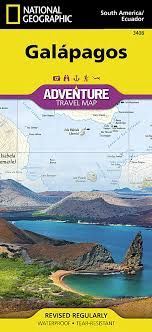
Galápagos Map · Nat Geo
$35
Sold out
Price incl. GST (15%) $4.57
Sold out
Product details
• Waterproof • Tear-Resistant • Travel Map
Resting on the Nazca tectonic plate in the eastern Pacific Ocean, approximately 600 miles west of Ecuador, the actively volcanic Galápagos Islands were discovered in 1535 by the bishop of Panama, Tomás de Berlanga, when his ship drifted off course.
In 1835, naturalist Charles Darwin, aboard the H.M.S Beagle, arrived in the Galápagos and spent 5 weeks collecting geological and biological specimens from several islands. He was astonished by the variety of birds, tortoises, iguanas, and other creatures—all showing no fear of humans. Darwin's brief visit partly inspired his 1859 theory of evolution by natural selection and led to the declaration of Galápagos as a national park 100 years later, in 1959. Remarkably, Galápagos was also declared the first UNESCO World Heritage site in 1978.
Explore the Galápagos with National Geographic's Adventure Map
National Geographic has created a detailed map of this remote island chain, where many species are found nowhere else on earth. The map offers:
- Front Side: An overview of the entire island chain, providing context for travelers since the islands are spread over a vast area of ocean.
- Back Side: Detailed descriptions of each major island, including:
- Endemic species (animals or plants unique to the Galápagos).
- Fascinating facts about the human history of each island.
- Additional key details important for travelers.
Built for Adventure
Every Adventure Map is printed on durable synthetic paper, making it:
- Waterproof
- Tear-Resistant
- Tough, capable of withstanding the rigors of international travel.
Whether you’re a seasoned explorer or a first-time traveler, this map is an essential companion for discovering the wonders of the Galápagos Islands.
Galápagos Map · Nat Geo
Display prices in:NZD